RS/tRNA Foundational Publication Support
Meineke, Birthe, Johannes Heimgärtner, Jürgen Eirich, Michael Landreh, and Simon J Elsässer. (2020) 2020. “Site-Specific Incorporation of Two NcAAs for Two-Color Bioorthogonal Labeling and Crosslinking of Proteins on Live Mammalian Cells”. Cell Reports 31 (12): 107811. doi:10.1016/j.celrep.2020.107811.
RS/tRNA Pair Development Year
2020
ncAA(s) Incorporated
N6-(1-Methylcycloprop-2-enecarboxamido)lysine (CpK)
ncAA Structure (png, jpg, jpeg)

ncAA Utility
Reactive handle for ‘photo-click’
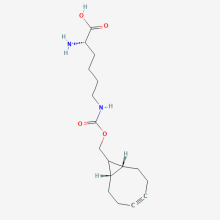
exoBCN-L-Lysine
ncAA Structure (png, jpg, jpeg)
ncAA Utility
Reactive handle for SPAAC
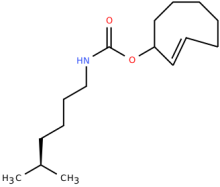
2'-axialTCOK (TCO*)
ncAA Structure (png, jpg, jpeg)
ncAA Utility
Biorthogonal ligation, Click-Chemistry
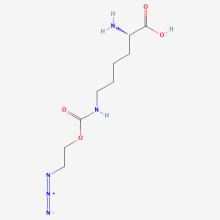
N6-((2-azidoethoxy)carbonyl)-L-lysine(AzeoK)
ncAA Structure (png, jpg, jpeg)
ncAA Utility
Reactive handle for azide-alkyne cycloaddition
propargylglycine
ncAA Structure (png, jpg, jpeg)
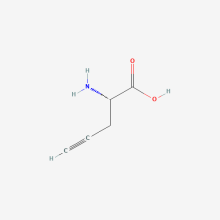
ncAA Utility
copper-catalyzed alkyne-azide click chemistry (CuACC) can be used for time-resolved, cell-selective proteomic analyses
RS Organism of Origin
Parent RS
RS Mutations
Y125A
tRNA Organism of Origin
Parent tRNA
tRNA Anticodon
CUA
Other tRNA Mutations
A41AA
C55A
Transplanted Methanomethylophilus alvus Mx1201 (Mx1201) acceptor stem onto G1 PylT, creating a hybrid PylT
C55A
Transplanted Methanomethylophilus alvus Mx1201 (Mx1201) acceptor stem onto G1 PylT, creating a hybrid PylT
RS/tRNA Availability
https://www.addgene.org/browse/article/28211530/
Used in what cell line?
RS/tRNA Additional Notes
In HEK293 cells, the G1 PylT/RS(Y125A) pair singly incorporated CpK, BCNK, TCO*K, AzeoK and ProK at the 150 site on GFP. Expressions were done with a 4:1 ratio of tRNA to RS and had varying efficacy depending on the ncAA.
Dual-encoding of TCO*K and ProK was performed alongside an Mma PylT/RS variant (MmPylRS(Y306A,Y384F)) recoded for ochre suppression. Full-length sfGFP was acquired only in the presence of both ncAAs, with incorporation at sites 102 (TCO*K) and 150 (ProK) confirmed by tandem mass spectrometry. This combination of RS/tRNA pairs were shown to be effective for dual site-specific fluorescent labeling of cell surface receptors.
Dual-encoding of TCO*K and ProK was performed alongside an Mma PylT/RS variant (MmPylRS(Y306A,Y384F)) recoded for ochre suppression. Full-length sfGFP was acquired only in the presence of both ncAAs, with incorporation at sites 102 (TCO*K) and 150 (ProK) confirmed by tandem mass spectrometry. This combination of RS/tRNA pairs were shown to be effective for dual site-specific fluorescent labeling of cell surface receptors.